Should You Repair or Replace Your Fence?
After a long Alberta winter — or a summer of wind, hail, and relentless UV exposure — it’s not unusual to walk outside and find your fence looking worse for wear. A leaning post, a cracked panel, a gate that no longer latches properly. For homeowners across Calgary, Edmonton, and BC’s Interior, it’s one of the most common calls our fence builders receive every spring.
The question most homeowners land on pretty quickly is: do I fix it, or do I replace the whole thing?
It’s a fair question, and the answer isn’t always obvious. The right call depends on what type of fence you have, how old it is, how widespread the damage is, and what you want from your fence going forward. Whether you’re weighing a straightforward fence repair or considering a full replacement, this guide walks you through the key factors so you can make a confident, cost-effective decision.
Quick Answer: Should You Repair or Replace Your Fence?
Repair your fence if the damage is isolated, the overall structure is still sound, and the fence is less than halfway through its expected lifespan.
Replace your fence if damage is widespread, the material is breaking down, repair costs are approaching 50% or more of full replacement cost, or the fence no longer meets your needs for privacy, security, or appearance.
To get a professional opinion on whether fence repair or full replacement makes more sense for your property, contact Total Fencing Solutions for a free estimate. Most requests receive a response within 24 hours.
Signs Your Fence Can Be Repaired
Not every damaged fence needs to come down. Fence repair is often the smarter, more cost-effective choice when the right conditions are present. Here’s what to look for:
- Damage is isolated. One or two failing posts, a single warped or damaged panel, or a sagging gate hinge are localized problems with straightforward solutions.
- The structure is still solid. If the majority of your fence is standing straight, plumb, and secure, targeted repairs can add years to its life without major expense.
- The fence is relatively new. A fence that’s only a few years old with minor weather damage is almost always worth repairing rather than replacing.
- The material still has service life remaining. Steel and aluminum fences are built to last decades. A fence repair on a quality metal fence is often a sound investment that extends long-term performance significantly.
- The fence has design or aesthetic value. Ornamental or custom-designed fencing that suits your property’s look may be worth preserving rather than replacing with something generic.
A useful benchmark: if repairs address the problem without touching more than 20–30% of the overall fence, repair is likely the right call. A qualified fence contractor can help you make that assessment quickly during an on-site visit.
Signs It’s Time to Replace Your Fence
There are situations where fence repair becomes a short-term patch on a long-term problem. Replacement makes more sense when:
- Damage is widespread. Multiple failing or leaning posts, rust spreading across large sections, or panels deteriorating along the full length of the fence suggest a systemic issue that targeted repairs won’t resolve.
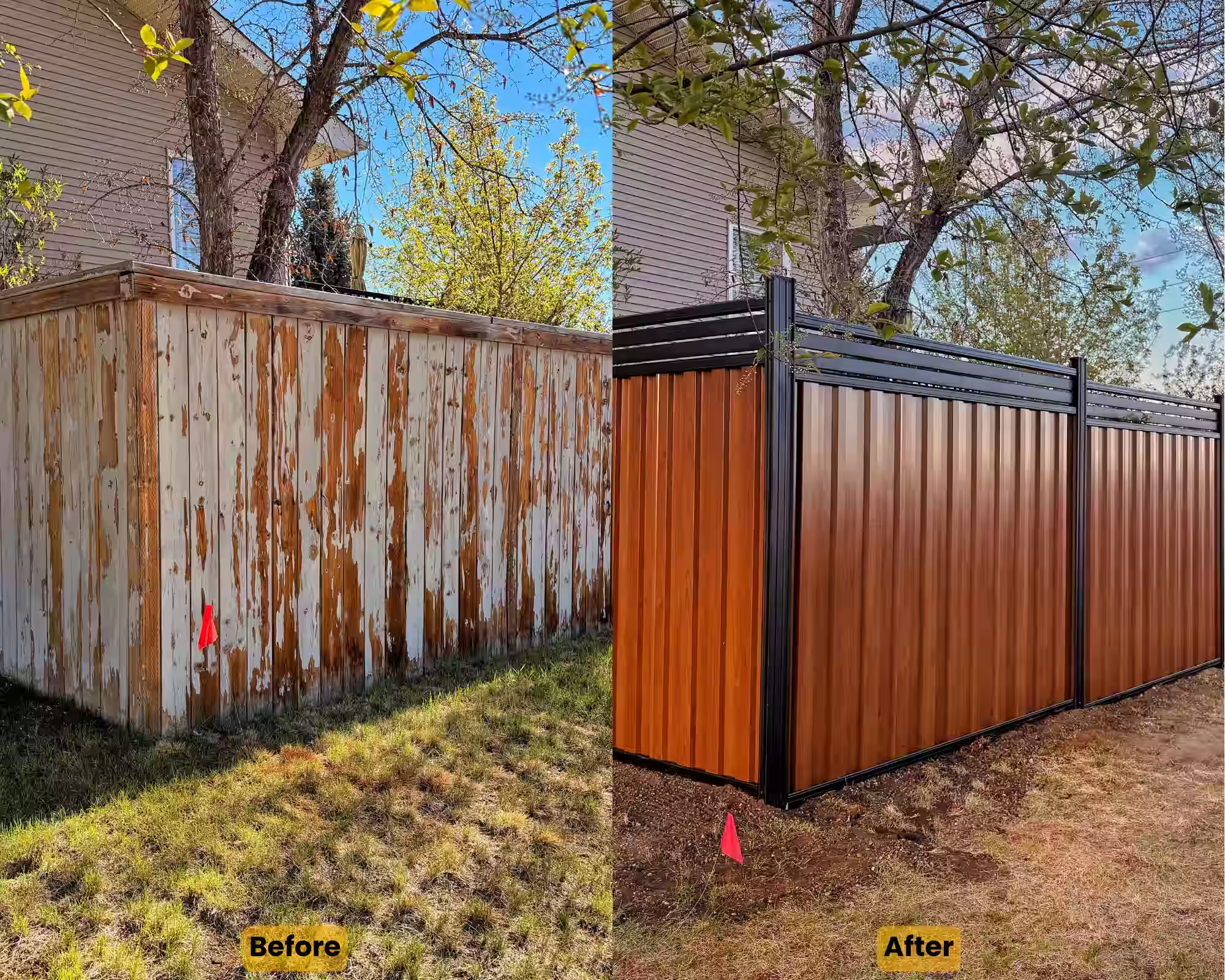
- The material is at the end of its life. Wood fences in Alberta and BC typically last 10–15 years before moisture, freeze-thaw cycles, and UV exposure cause serious structural degradation. At that point, patching often just delays the inevitable.
- Repair costs are climbing toward replacement cost. If you’re being quoted 40–50% of replacement cost just to bring the fence back to acceptable condition, full replacement is almost always the better investment.
- The fence no longer meets your needs. If your goals have shifted — more privacy, better security, improved curb appeal — replacement gives you the opportunity to upgrade rather than sink money into something that was never quite right.
- Safety is a concern. A structurally compromised fence, especially in a yard with children or pets, needs to be addressed decisively. Leaving underlying structural issues in place is not a long-term solution.
Cost Comparison: Fence Repair vs. Replacement
The cost of fixing a fence varies widely depending on what needs to be done. Resetting a single post might run a few hundred dollars. Addressing multiple damaged panels, widespread rust treatment, or structural issues across a longer fence run can push costs significantly higher.
Replacement costs depend on material, total linear footage, gate requirements, and design complexity. Steel and aluminum fencing carry a higher upfront cost than wood but deliver substantially lower maintenance costs over time — an important consideration in Alberta and BC, where wood fences face constant pressure from moisture, temperature swings, and freeze-thaw cycles that accelerate deterioration year over year.
The key question isn’t only what you’ll spend on fence repair today. It’s what you’ll spend over the next 10 to 15 years. A quick fix that buys two more years on a deteriorating wood fence may end up costing more in the long run than upgrading to a low-maintenance steel or aluminum system now.
For a detailed breakdown of how fencing materials compare on upfront and long-term cost, homeowners can also compare long-term steel fence pricing and ownership costs when evaluating durability, maintenance, and overall value.
What Your Fence Material Has to Do With It
Material plays a major role in the repair versus replace decision — and it’s one of the most important factors to consider before committing to either option.
Wood Fences
Wood fences are vulnerable to rot, warping, and moisture damage. Once water penetrates the core of posts or boards, the case for fence repair becomes difficult to justify. Alberta’s freeze-thaw cycles accelerate this process significantly, making wood one of the more maintenance-intensive options in this climate.
Steel Fences
Steel fences are highly durable and well-suited to repairs when needed. Surface rust can be treated and refinished. Individual components — posts, panels, rails — can often be replaced without disturbing the rest of the structure. A properly installed galvanized steel fence can last 20–30 years or more with minimal upkeep, making fence repair a straightforward and cost-effective option when damage is isolated.
Aluminum Fences
Aluminum fences are lightweight, corrosion-resistant, and low maintenance. They hold up well against Alberta and BC weather but can be bent or damaged by impact. Individual sections are generally replaceable, making localized repairs straightforward when the surrounding structure is still in good shape.
Chain Link Fences
Chain link is among the easiest to fix in sections, though older galvanized chain link can develop rust and structural weakening over time that makes full replacement more practical than repeated patching.
When to Call a Professional for Fence Repair or Replacement
Some fence issues are manageable for an experienced DIYer — tightening hardware, swapping out a single board, or adjusting a gate hinge. But most situations benefit from a professional assessment before committing to a course of action.
Anything involving post replacement, structural realignment, significant rust damage, or a fence that’s visibly failing across multiple sections warrants expert eyes. A qualified fence contractor can identify whether underlying issues — frost heave, soil movement, failing footings — are driving the visible damage, and give you an honest recommendation on whether fence repair or full fence installation in Calgary or elsewhere in Alberta and BC is the right path forward.
Before starting any project in Calgary, it’s also worth confirming whether a permit is required. The City of Calgary’s fences and retaining walls permit page outlines current height rules, permit requirements, and how to apply.
For guidance on finding the right professional for your project, see our guide on how to choose the right fence contractor in Alberta.
Ready to get a professional opinion? Contact Total Fencing Solutions — Calgary’s trusted fence builders serving Alberta and BC Interior. Most requests receive a response within 24 hours.
Frequently Asked Questions About Fence Repair
How do I know if my fence post needs fence repair or full replacement?
If a post is leaning but the base is still structurally intact, it can often be reset and braced. If the post is rotted, cracked at ground level, or shifting due to frost heave damage, full replacement is typically the better option. A fence contractor can assess this quickly during an on-site visit.
How long does a typical fence repair take?
Most localized jobs — a post reset, panel replacement, or gate adjustment — can be completed in a single visit. More extensive work involving multiple sections may take a full day or longer depending on scope and material type.
Is fence repair worth it on a wood fence in Alberta or BC?
It depends on age and condition. If the fence is under 8–10 years old and damage is isolated, repairs usually make sense. If it’s older and showing widespread rot, warping, or structural failure, replacement with a more durable material like steel or aluminum is often the smarter long-term investment given the climate demands across Alberta and BC.
Do I need a permit for fence repair or replacement in Calgary?
In most cases, standard repairs do not require a permit. However, if you’re replacing a fence that exceeds height limits — over 2m in the rear yard or 1.2m in the front yard — a development permit may be required. The City of Calgary’s fence permit page has current requirements and how to apply.
When does fence repair stop making financial sense?
A commonly used guideline is the 50% rule: if repair costs exceed 50% of the cost of full replacement, replacement is generally the better investment. This is especially true when the existing material is aging and likely to need further attention in the near future. Your fence contractor can help you run those numbers before you commit.