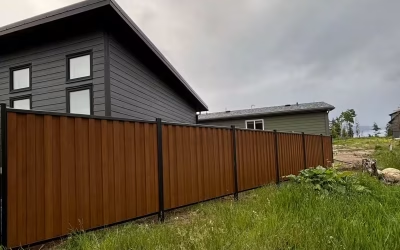
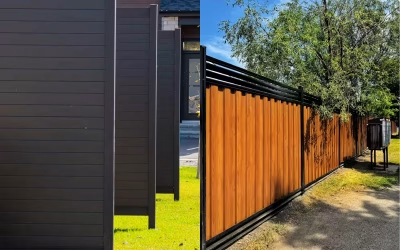
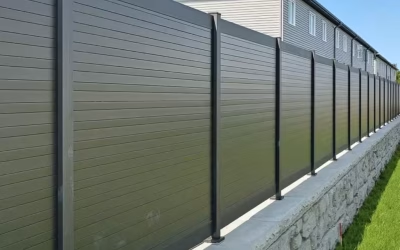
The fencing industry has evolved dramatically over the past several decades. What began as simple boundary markers constructed from wood has transitioned through vinyl and composite systems and has now entered a new phase defined by engineered metal fencing solutions. This evolution reflects a broader shift in how property owners, developers, and contractors evaluate fencing: not as a disposable exterior feature, but as a long-term infrastructure component.
Today, metal fencing is not just an alternative. It is actively shaping modern fencing standards for durability, performance, customization, and lifecycle value across residential, commercial, agricultural, and multi-unit applications.
A Brief History of Fencing Materials: From Wood to Vinyl to Metal
Traditional wood fencing dominated the market for decades due to its availability and low upfront cost. However, wood introduced inherent weaknesses such as moisture absorption, rot, warping, insect damage, and frequent maintenance cycles.
Vinyl fencing emerged as a response, offering improved resistance to moisture and reduced maintenance. While vinyl solved some surface-level issues, long-term performance challenges became apparent, particularly brittleness in cold climates, UV fading, cracking, and limited structural strength.
Metal fencing represents the next stage in this progression. Rather than masking material weaknesses, modern metal fence systems are engineered to eliminate them entirely, offering structural integrity, environmental resistance, and design longevity that neither wood nor vinyl can reliably provide.
Why Metal Fencing Outperforms Traditional Materials
When evaluated side by side, metal fencing consistently outperforms wood and vinyl across the metrics that matter most in real-world conditions.
Modern metal fencing systems deliver:
- Superior structural strength under wind and snow loads
- Resistance to cracking and warping
- Stable performance across extreme temperature ranges
- Long-term colour and finish retention
- Predictable lifespans measured in decades rather than years
Vinyl fencing, while low maintenance initially, often suffers from fading, brittleness, and panel deformation over time, especially in freeze-thaw environments. Metal fencing avoids these limitations through material composition, protective coatings, and engineered profiles.
Engineered for Precision: Why Quality Specifications Matter
One of the defining advantages of modern fencing systems is spec-driven manufacturing. Unlike traditional fencing assembled from variable raw materials, metal fence systems are produced to exact technical standards.
Key quality indicators include:
- Steel or aluminum gauge thickness for structural strength
- Galvanization and advanced powder-coating systems
- Weld integrity and reinforced panel design
- Consistent tolerances across large-scale installations
High-quality metal fencing manufactured for Canadian conditions is engineered specifically for harsh climates, making it particularly well suited for Western Canada. These specifications directly influence lifespan, maintenance requirements, and long-term performance.
Customization Without Compromising Structural Performance
Modern fencing solutions offer a high degree of design and functional customization while maintaining structural integrity.
Metal fencing systems can be engineered to support:
- Manual or operator-integrated sliding gates
- Double swing gates for wide openings
- Double swing gates with integrated man-gates
- Site-specific solutions for slopes, grades, and complex layouts
Because these systems are precision fabricated, customization does not compromise alignment, security, or durability.
Metal Privacy Fencing as a Modern Alternative
One of the most significant developments shaping modern fencing is the rise of metal privacy fencing. These systems provide full visual screening while eliminating the long-term maintenance challenges associated with traditional materials.
Metal privacy fencing offers:
- Clean architectural lines
- Fade-resistant finishes
- Consistent panel alignment
- Long-term durability without warping, rotting, or cracking
This makes it increasingly popular for residential properties, infill projects, and commercial developments.
Fire-Resistant Fencing for High-Risk Communities
In wildfire-prone regions across Western Canada, including mountain and interface communities, fencing material selection plays a critical role in overall property resilience.
Metal fencing provides a non-combustible solution compared to wood or vinyl, which can ignite or melt under extreme heat. As fire-conscious design becomes a growing priority, metal fencing is increasingly specified as part of broader mitigation strategies.
Architectural Integration and Ornamental Applications
Modern metal fencing is designed to integrate seamlessly with its surrounding environment. Advanced coating technologies allow for precise colour matching, enabling fences to complement new builds, renovations, and architecturally controlled developments.
Ornamental metal fencing has evolved beyond decorative use alone. Today’s systems are engineered to meet strict architectural guidelines while delivering long-term durability, making them ideal for communities where appearance and performance must align.
Agricultural, Estate, and Acreage Applications
Metal fencing is increasingly replacing wood, vinyl, and chain-link fencing on acreages and farms across Alberta. These systems offer improved durability against environmental exposure, reduced maintenance across large perimeters, and consistent long-term performance where traditional fencing often deteriorates.
Integrated Gate Systems and Access Security
Fencing performance extends beyond panels alone. Modern fencing systems support advanced gate hardware and locking mechanisms that far exceed the reliability of traditional latch-based systems.
Integrated gate solutions allow for:
- Controlled access for multi-unit properties
- Commercial-grade locking hardware
- Long-term alignment without sagging
- Enhanced security for residential and commercial sites
Modern Fencing Applications Across Property Types
Metal fencing is now widely adopted across residential properties seeking low-maintenance solutions, multi-family developments requiring consistency, and commercial and industrial sites demanding long-term performance.
Note: Even the highest-quality fencing materials depend on proper installation. Professional installations prioritize structural stability from the ground up, with posts set to appropriate depths based on soil conditions and frost requirements.
Long-Term Value in Modern Fencing Systems
The fencing industry is moving decisively toward performance-driven materials. Metal fencing aligns with this shift by delivering durability, predictability, and design longevity across residential, commercial, and rural applications.
To explore how modern fencing systems are applied across different use cases, visit the products page to review available systems and configurations, or browse the gallery for real-world installation examples.
For a deeper comparison of materials, see our blog on metal vs wood fencing in Alberta.
For background on metal fencing materials and classifications, you can also reference this overview of metal fencing on Wikipedia.